Choosing the right basketball flooring is about more than appearance. A basketball court must handle fast movement, repeated jumps, heavy use, and changing indoor conditions while providing a reliable playing surface. For schools, sports centers, and professional facilities, the choice often comes down to engineered hardwood or solid hardwood.
Both options offer the natural beauty of wood, but they differ in construction, dimensional stability, and renovation needs. Understanding these differences can help facility owners make a smarter long-term investment.
In this guide, we will compare both flooring types, explore their environmental requirements, and explain how to choose a system that suits your facility. We will also look at how CoPo Sports supports modern basketball court projects.
Basketball Flooring: How Do Engineered and Solid Wood Structures Compare?
The first difference is how each floor is built. Construction affects how the material responds to moisture changes, how the complete system supports athletes, and what maintenance it may need over time.
How engineered hardwood is constructed
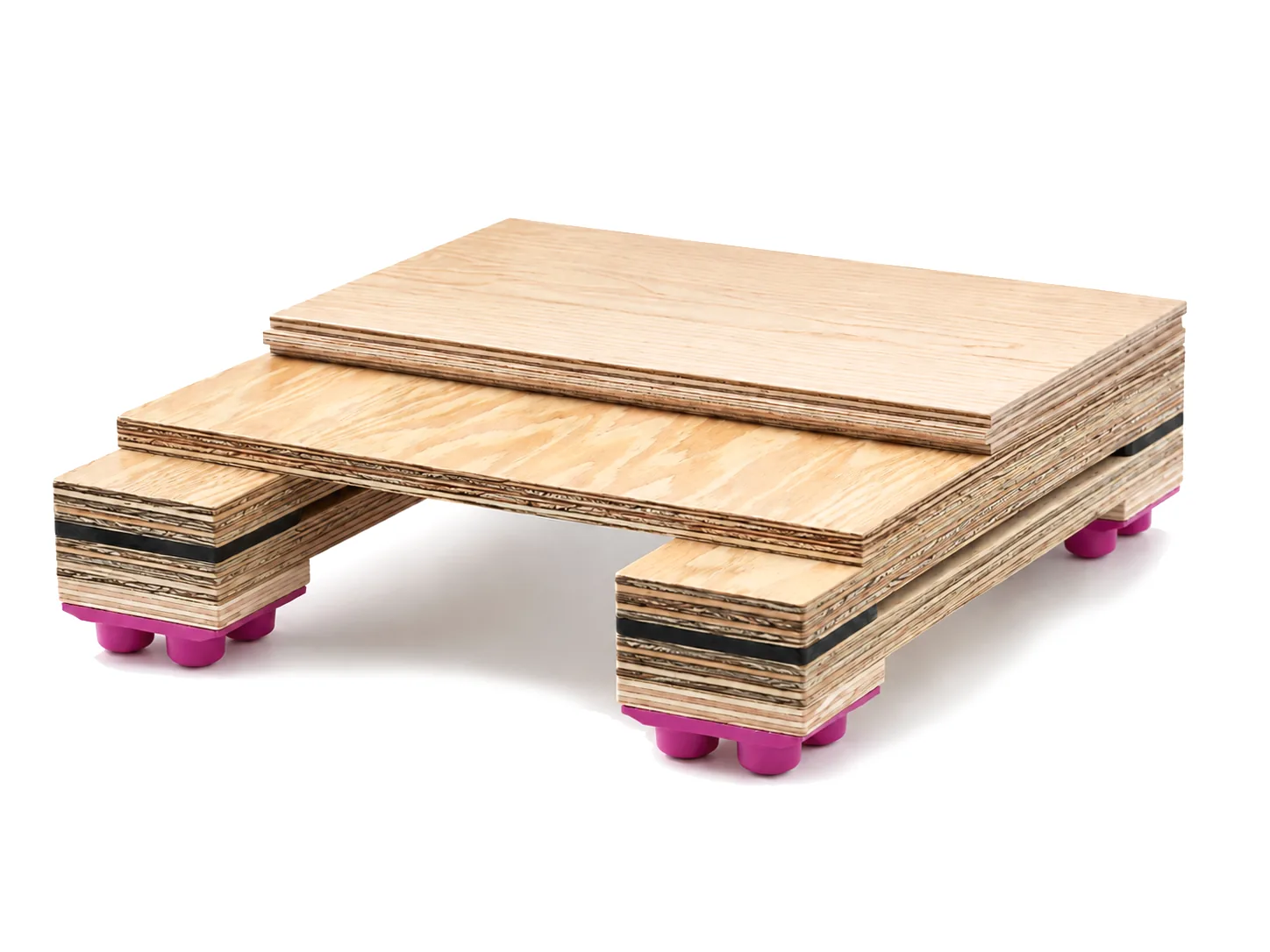
Engineered hardwood uses multiple bonded layers, often arranged with different grain directions. This cross-layered structure helps limit movement as temperature and moisture conditions change.
CoPo Sports uses cross-layered hardwood panels with a selected natural wood surface, bonded with resin adhesive and manufactured using a hot-press process. This construction combines the appearance of natural hardwood with a structure designed for greater dimensional stability.
How solid hardwood is constructed
Solid hardwood flooring uses solid wood boards or strips throughout each flooring piece. Maple is a common choice for traditional indoor basketball courts because of its appearance and established use in sports facilities.
However, solid wood naturally expands and contracts as moisture levels change. Proper installation and environmental control are essential to limit gaps, cupping, and other problems.
Why thickness matters
Thickness affects the flooring system’s design, but thicker does not always mean better. Buyers should check the total system thickness, hardwood wear-layer thickness, subfloor construction, and shock absorption components.
Solid hardwood may offer greater sanding depth, depending on its construction. Engineered hardwood can also be refinished when its surface layer allows it.
So, which structure offers better stability? That depends partly on the building environment, making climate control the next important consideration.
Basketball Flooring: What Environmental Controls Matter?
Wood responds to its surroundings. Even a well-built basketball court can develop problems when indoor humidity, temperature, or moisture levels change too much.
Temperature and humidity management
Both engineered and solid hardwood floors need suitable indoor conditions. Large humidity swings can cause wood to expand or shrink, potentially creating gaps, surface distortion, or pressure between flooring components.
Engineered construction can reduce dimensional movement compared with conventional solid wood, but it does not eliminate this risk.
CoPo Sports reports that its engineered material has an expansion and contraction coefficient approximately one-eighth that of conventional hardwood. Buyers should confirm the comparison basis and supporting test data for the specific system they plan to install.
Moisture protection before installation
Good planning begins before the flooring arrives. Facility owners and contractors should:
- Test concrete slabs and substrates for moisture.
- Follow the manufacturer’s requirements for storage and acclimation.
- Operate the building’s heating, ventilation, and air-conditioning system as recommended.
- Repair leaks and address water intrusion promptly.
- Maintain stable indoor conditions throughout the year.
These steps protect the investment regardless of which flooring type is selected.
But environmental control is only part of the story. What happens when the court becomes worn or the facility needs a refresh? That is where renovation options become important.
Basketball Flooring: Maintenance and Renovation Options
Every basketball court needs regular care. The main difference lies in how much surface material can be renewed and whether damaged areas can be repaired without replacing a larger section.
Routine maintenance and recoating
Both flooring types benefit from regular dust removal, approved cleaning products, and quick attention to spills. Facility teams should also follow the manufacturer’s guidance for maintaining traction and protecting the finish.
When the finish begins to wear but the wood underneath remains in good condition, recoating may restore the surface. This process differs from sanding because it generally does not remove a significant layer of wood.
Sanding and refinishing
Solid hardwood courts can often be sanded and refinished multiple times, provided enough usable wood remains.
Engineered hardwood may also be refinished, but the number of possible sanding cycles depends on the thickness of its natural wood surface and the manufacturer’s limits. Sanding too deeply can damage the underlying layers.
Before choosing a renovation method, inspect the wear layer, finish, and overall condition of the floor.
Repair or replacement?
Local repairs may be possible for either flooring type. However, the right approach depends on the installation method, the extent of damage, and the availability of matching materials.
If the underlying structure has moisture damage or widespread movement, replacing the surface alone may not solve the problem.
For facility managers, the best renovation plan considers both immediate repair costs and future maintenance needs. This brings us to a practical question: how should you choose a system for a new court or an existing facility?
Choosing Basketball Flooring for New Builds and Renovations
There is no single answer for every basketball facility. The right option depends on building conditions, expected use, available maintenance resources, and the project budget.
For new construction, evaluate the complete flooring assembly, including the subfloor, cushioning, surface material, and installation requirements.
For renovation projects, begin with an inspection. Check moisture conditions, existing floor stability, surface wear, and compatibility with the proposed replacement system.
A facility that values traditional solid wood and future sanding options may prefer solid hardwood. Another facility may prioritize the dimensional stability offered by engineered construction.
Portable engineered hardwood systems may also suit certain venues that need a removable or adaptable installation. However, the product must be designed for the intended use.
When comparing basketball court flooring options, look beyond the initial purchase price. Installation, cleaning, refinishing, repairs, and downtime all affect long-term ownership costs.
What Should Buyers Check Before Choosing Basketball Flooring?
Price matters, but performance and documentation deserve equal attention.
Basketball courts must support quick stops, changes of direction, jumping, and repeated landings. The complete floor system influences how the surface responds to these movements.
Three important performance measures are:
- Shock absorption: How much impact energy the floor absorbs.
- Vertical deformation: How much the system deflects under a specified load.
- Ball rebound: How consistently a basketball bounces from the playing surface.
CoPo Sports describes its engineered hardwood system as using layered construction to combine stability, elasticity, impact absorption, and consistent ball rebound.
When comparing products, request technical specifications and applicable test reports. Confirm that any claimed certification applies to the exact flooring system being considered.
Buyers should also review installation instructions, warranty conditions, maintenance requirements, and available project support. These details help ensure that the floor meets the facility’s needs from installation through future renovation.
Why Choose CoPo Sports for Basketball Flooring?
Selecting a flooring supplier is just as important as choosing the material. Facility owners need a partner who understands product performance, project requirements, and the challenges of installing sports flooring.
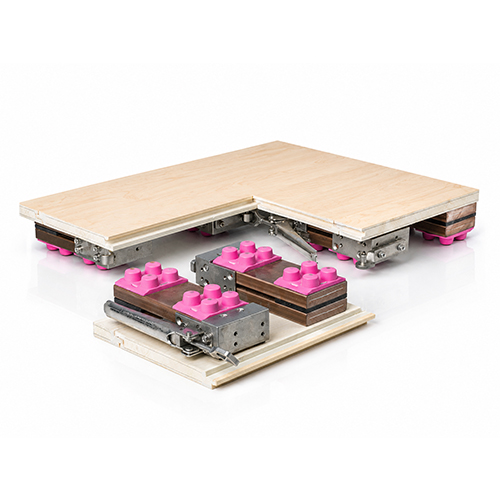
CoPo Sports offers engineered hardwood sports flooring systems designed to combine the natural appearance of wood with a layered structure that helps reduce dimensional movement.
Its integrated shock absorption system is designed to support a stable playing surface, controlled deformation, and consistent ball rebound. These features are relevant to facilities that want to balance playing performance with long-term floor care.
CoPo Sports also offers several flooring options, including portable engineered hardwood systems and its 15.0 and 18.0 series. The best choice depends on the project specifications and intended application.
As a U.S.-registered sports flooring brand with global manufacturing capabilities, CoPo Sports supports contractors, distributors, architects, developers, and facility owners. Its services include OEM and ODM customization, sourcing support, and compliance-related documentation.
To explore available systems and discuss your requirements, visit the CoPo Sports engineered hardwood sports flooring systems page.
Conclusion: Make a Smarter Investment in Your Basketball Flooring
Engineered and solid hardwood can both provide attractive, high-quality basketball surfaces. However, their construction, environmental response, and renovation options differ.
Solid hardwood may offer more sanding flexibility, while engineered hardwood is designed to reduce dimensional movement through its layered structure. Both require proper climate control, routine maintenance, and careful installation.
The best choice depends on your facility, performance needs, and long-term plans. By comparing complete flooring systems rather than surface materials alone, you can make a more informed decision.
Planning a new court or upgrading an existing one? Contact CoPo Sports to discuss your project, compare suitable flooring options, and request a tailored quote for your basketball facility.
Frequently Asked Questions
1. What is the best basketball flooring?
The best option depends on the facility’s budget, usage, environmental conditions, performance requirements, and maintenance plans. Both engineered and solid hardwood can suit indoor basketball courts when properly specified.
2. Is engineered hardwood suitable for basketball courts?
Yes. A properly designed sports flooring system can provide a natural wood surface, shock absorption, and reliable ball rebound.
3. Can basketball flooring be refinished?
Many hardwood sports floors can be refinished. The available sanding depth depends on the remaining wood surface, flooring construction, and manufacturer guidance.
4. How can I extend the life of a basketball court floor?
Use approved cleaning methods, maintain stable indoor conditions, address moisture problems quickly, and follow the manufacturer’s maintenance recommendations.