Choosing the right outdoor sports flooring involves more than selecting an attractive surface or comparing product prices. Every outdoor court has different conditions that can affect flooring performance, player comfort, and long-term use. Climate, ground stability, drainage, and sports activities all play an important role in the decision.
A flooring system that works well in one location may not be the best choice for another. For contractors, distributors, and project owners, understanding these differences can help prevent installation problems and unnecessary costs.
So, what should you check before selecting flooring for your next project? Let’s look at the main site conditions and how they influence your decision.
Why Site Conditions Matter When Choosing Outdoor Sports Flooring
Outdoor courts face conditions that indoor facilities rarely experience. Sunlight, rain, temperature changes, and frequent use can all affect the surface over time. This is why site evaluation should come before product selection.
A good outdoor sports flooring system should match the location, support the intended sports activities, and work with the existing foundation.
Understanding the Outdoor Environment
Start by checking the site’s exposure to sunlight, wind, rain, and seasonal temperature changes. A court in a hot region may face different challenges from one in an area with frequent rainfall or freezing winters.
Also consider nearby trees, buildings, and other structures. These can affect shade, moisture levels, and water flow across the court.
Balancing Performance and Long-Term Value
The cheapest option is not always the most suitable. A system that does not match the site may require more maintenance or repairs later. Choosing based on actual conditions helps protect your investment.
But which environmental factors deserve the most attention? Climate is a good place to start.
How Climate Affects Outdoor Sports Flooring Selection
Weather has a direct impact on outdoor court surfaces. Before choosing outdoor sports flooring, buyers should understand the local climate and how seasonal changes may affect the installation.
Temperature Changes and Thermal Expansion
Outdoor materials expand when temperatures rise and contract when they fall. If a flooring system cannot manage these movements properly, it may experience stress, gaps, or surface movement.
This makes expansion joints and suitable installation spacing important. Buyers should also follow the manufacturer’s installation instructions, especially in regions with large temperature differences.
UV Exposure and Color Stability
Long hours of direct sunlight can cause some materials to fade or lose their original appearance. UV resistance is therefore an important factor when comparing outdoor flooring options.
Ask suppliers about material composition, UV protection, and available color options before placing an order.
Rainfall and Moisture Exposure
Frequent rain creates additional challenges. Flooring should be suitable for outdoor moisture exposure, while the entire court structure must allow water to drain properly.
However, weather resistance alone cannot solve every water-related problem. The foundation and drainage system matter just as much.
Why Base Layers and Drainage Matter for Outdoor Sports Flooring
Even a high-quality surface can perform poorly when installed on an unstable or unsuitable foundation. That is why checking the base is one of the most important steps in any outdoor court flooring project.
Choosing Between Concrete and Asphalt Bases
Concrete and asphalt are common foundation options for outdoor courts. Both can provide a suitable base when properly constructed and maintained.
Before installation, check that the existing surface is stable, load-bearing, and free from major cracks or loose areas. An old court may also need repairs before new flooring is installed.
Direct installation on soil, grass, sand, or loose ground is generally not recommended for the flooring systems discussed here.
Checking Surface Flatness
Uneven areas can affect panel support, court appearance, and player movement. Inspect the base for dips, raised sections, cracks, and other defects before starting installation.
A properly prepared foundation gives the flooring system a more stable starting point.
Planning Proper Drainage
Where will rainwater go after it reaches the court? This is a question every project planner should answer before installation.
The base should have a suitable drainage slope and a clear water discharge path. Standing water can create slippery conditions, affect court usability, and increase maintenance needs.
Once the foundation and drainage are ready, the next step is to consider who will use the court and how often.
Matching Outdoor Sports Flooring with Sports Use and Foot Traffic
Not every outdoor court has the same purpose. A school basketball court, a public recreation area, and a temporary event venue have different requirements.
Understanding the intended use helps buyers select a system that offers the right balance of comfort, stability, and durability.
Basketball and 3×3 Court Requirements
Basketball courts need a surface that supports regular movement, jumping, running, and changes in direction.
For 3×3 and 5v5 basketball projects, consider the court dimensions, expected player numbers, shock absorption requirements, and surrounding safety areas.
The flooring quantity should also account for the required playing area, runoff space, fencing positions, and site layout.
Youth Training and Recreational Courts
Youth training areas may benefit from flooring with a softer and more comfortable foot feel. Shock absorption is another important factor when comparing different systems.
For public sports areas, buyers should also consider how many people will use the court and how frequently it will be occupied.
Heavy Foot Traffic and Multi-Use Courts
Busy community courts need surfaces suited to repeated use. Maintenance requirements, installation quality, and material performance should all be part of the selection process.
So, with the climate, foundation, and intended use understood, how do you choose the actual flooring system?
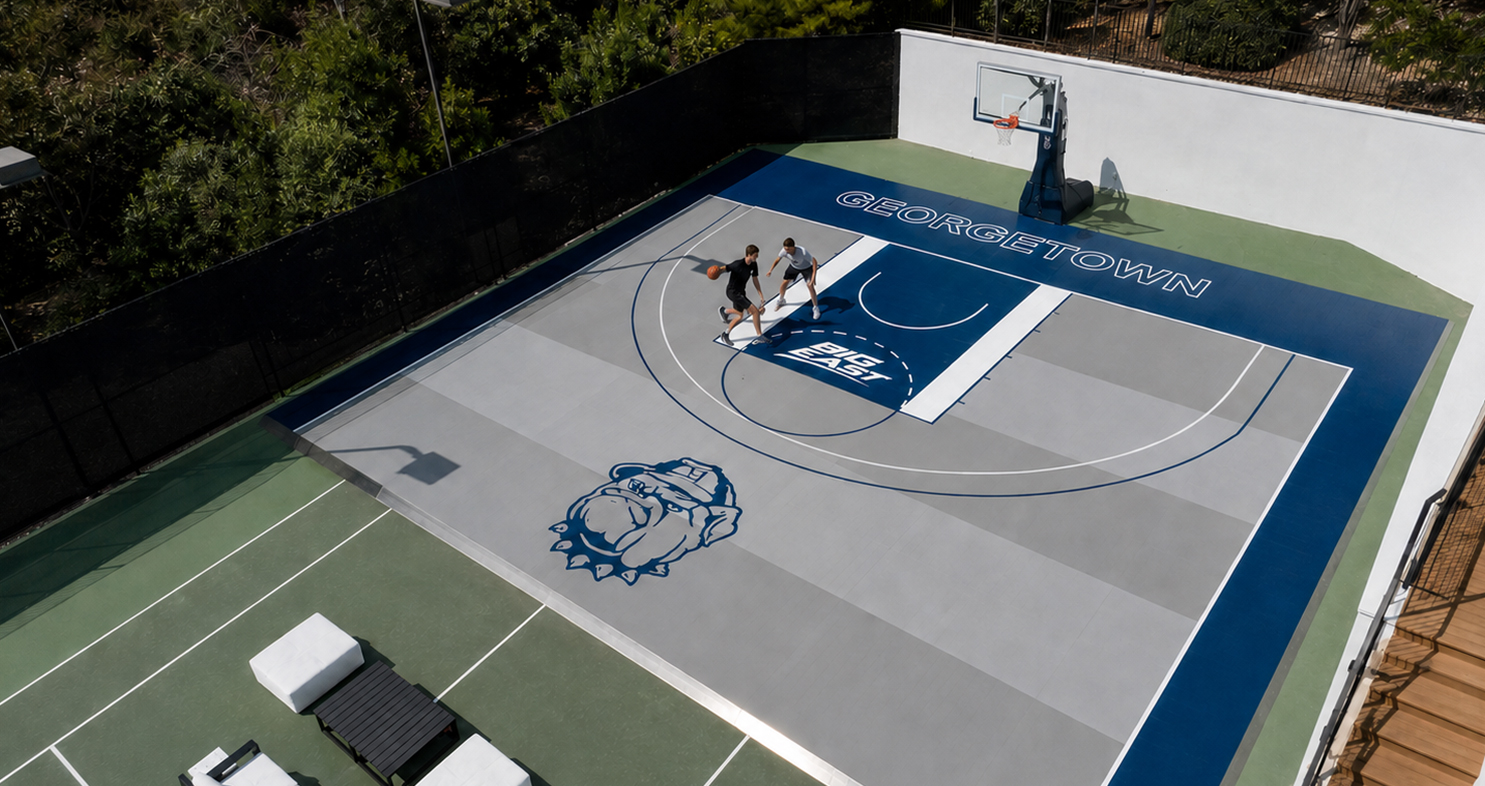
How to Choose the Right Outdoor Court Flooring System
Different projects need different flooring structures. COPOSPORTS offers several outdoor basketball flooring options that can be selected according to installation method, court use, and performance requirements.
Fixed BPC Sports Flooring
The BD-18F fixed BPC system is designed for permanent outdoor basketball courts. It features 18 × 152 × 1500 mm bio-based flooring panels and a double-keel structure with a built-in 5 mm foam pad.
It is worth considering for projects that require a fixed installation and a structured flooring system for regular basketball activities.
Portable BPC Sports Flooring
The BS-25P portable BPC system is designed for temporary courts, sporting events, and projects that need faster court conversion.
Its structure includes 28 × 125 × 1160 mm flooring panels, portable keels, TPE shock pads, and leveling pads.
This option can suit 3×3 and 5v5 basketball projects where the ability to install and relocate the court is important.
16mm and 19mm TPE Modular Flooring
For projects that prioritize a softer surface and modular installation, COPOSPORTS offers two TPE options.
PowerMatch 16mm uses 250 × 250 × 16 mm tiles. It offers a softer foot feel, noise reduction, and a patented expansion joint design.
PowerPro 19mm uses a thicker elastic structure and is designed for projects seeking stronger impact absorption and additional cushioning.
The right choice depends on the site’s conditions, intended use, and project requirements rather than thickness alone.
Why Choose COPOSPORTS for Outdoor Sports Flooring Projects?
Selecting a suitable product is only one part of delivering a successful sports court. Buyers also need reliable technical guidance, customization options, and support throughout the project.
COPOSPORTS works as a full-cycle sports flooring solutions partner for global contractors, brands, distributors, and event operators.
Technical Project Support
From early consultation to CAD layout review, system recommendations, and installation guidance, COPOSPORTS helps partners evaluate their project requirements and choose suitable flooring systems.
OEM and ODM Customization
Different projects often require different visual designs. COPOSPORTS supports customized colors, surface textures, branding, court graphics, and product structures.
These options help distributors, contractors, and sports brands develop flooring solutions that match their market and project needs.
Quality and Long-Term Support
Production follow-up, quality inspection, technical documents, certification references, delivery coordination, and after-sales support are also part of the company’s service approach.
Rather than focusing only on product supply, COPOSPORTS aims to help partners manage projects with greater confidence.
Conclusion
Choosing suitable outdoor sports flooring starts with understanding the site. Climate affects material selection, the foundation provides structural support, and proper drainage helps manage rainwater. Sports activities and foot traffic then determine the performance requirements of the finished court.
There is no single flooring system that fits every project. Fixed BPC, portable BPC, and TPE modular flooring each serve different needs.
Planning an outdoor sports court? Contact COPOSPORTS with your project location, court dimensions, existing base type, and intended use. Our team can help you review the site requirements and recommend a suitable flooring solution for your project.
Frequently Asked Questions
1. What is the best outdoor sports flooring?
The best option depends on climate, foundation, drainage, sports type, and expected foot traffic.
2. Can outdoor court flooring be installed over existing concrete?
Yes, provided the concrete is stable, level, load-bearing, and has suitable drainage.
3. Is BPC flooring suitable for outdoor basketball courts?
COPOSPORTS offers fixed and portable BPC systems designed for outdoor basketball applications.
4. Why is drainage important for outdoor sports courts?
Proper drainage helps prevent standing water and supports safer, more reliable court use.
5. How do I choose between 16mm and 19mm TPE tiles?
Consider the desired foot feel, cushioning, impact absorption, and intended court use before selecting the thickness.