Purchase price informs you of one thing. It does not tell you how a surface will perform in July at 95°F, how it will drain after a heavy rain, or how much labor and material it will take to repair five years down the road. Contractors, facilities managers, and project buyers who select the best flooring for outdoor basketball court projects consider the entire lifespan of a surface, rather than the invoice.
This guide develops a 3-step scorecard. Apply it to set project requirements, stress-test surfaces for wet-weather performance, and evaluate your best options on evidence-based metrics. At the end, you will possess the information to make a justifiable, cost-effective choice about the best outdoor basketball court flooring to use in your project.
Step 1: Establish Your Project Requirements Before You Compare Surfaces
Lock down your project requirements before you request a single quote. Skipping this step leads to surface choices that perform well in a showroom but fail in the field, wrong installation method, incompatible subfloor, or a traction profile that creates liability on a public court.
Court Use Type and Intensity
Identify the primary use case before comparing any surface:
- 3×3 basketball: compact footprint, high-frequency dribbling, faster lateral movement; prioritize ball response and surface hardness.
- 5v5 full-court competition: longer playing sessions, full FIBA dimensions (91.9 ft × 49.2 ft), higher cumulative impact load on joints and surfaces.
- Public sports areas: mixed-age users, unsupervised play, mandatory anti-slip standards, higher vandalism exposure.
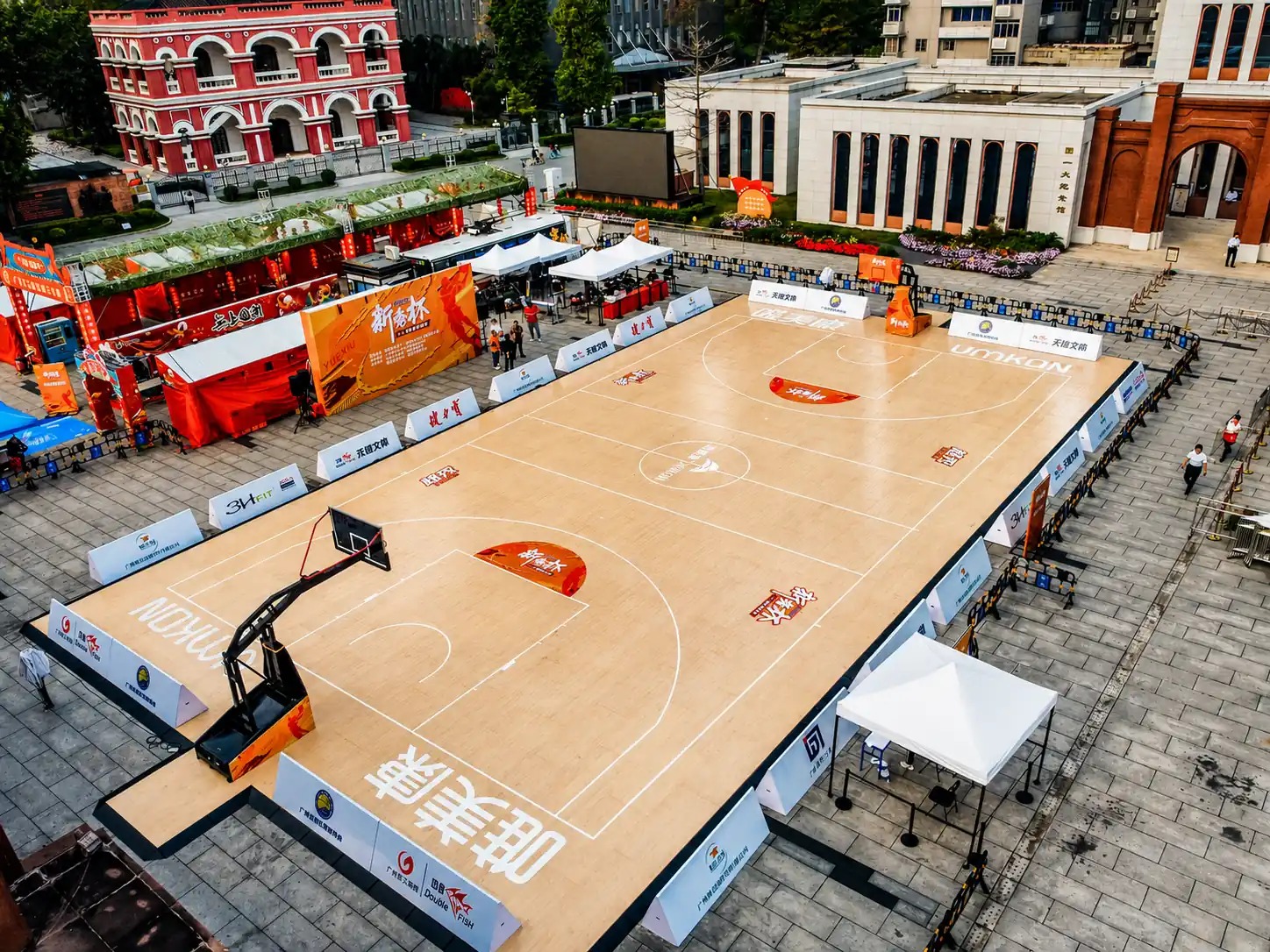
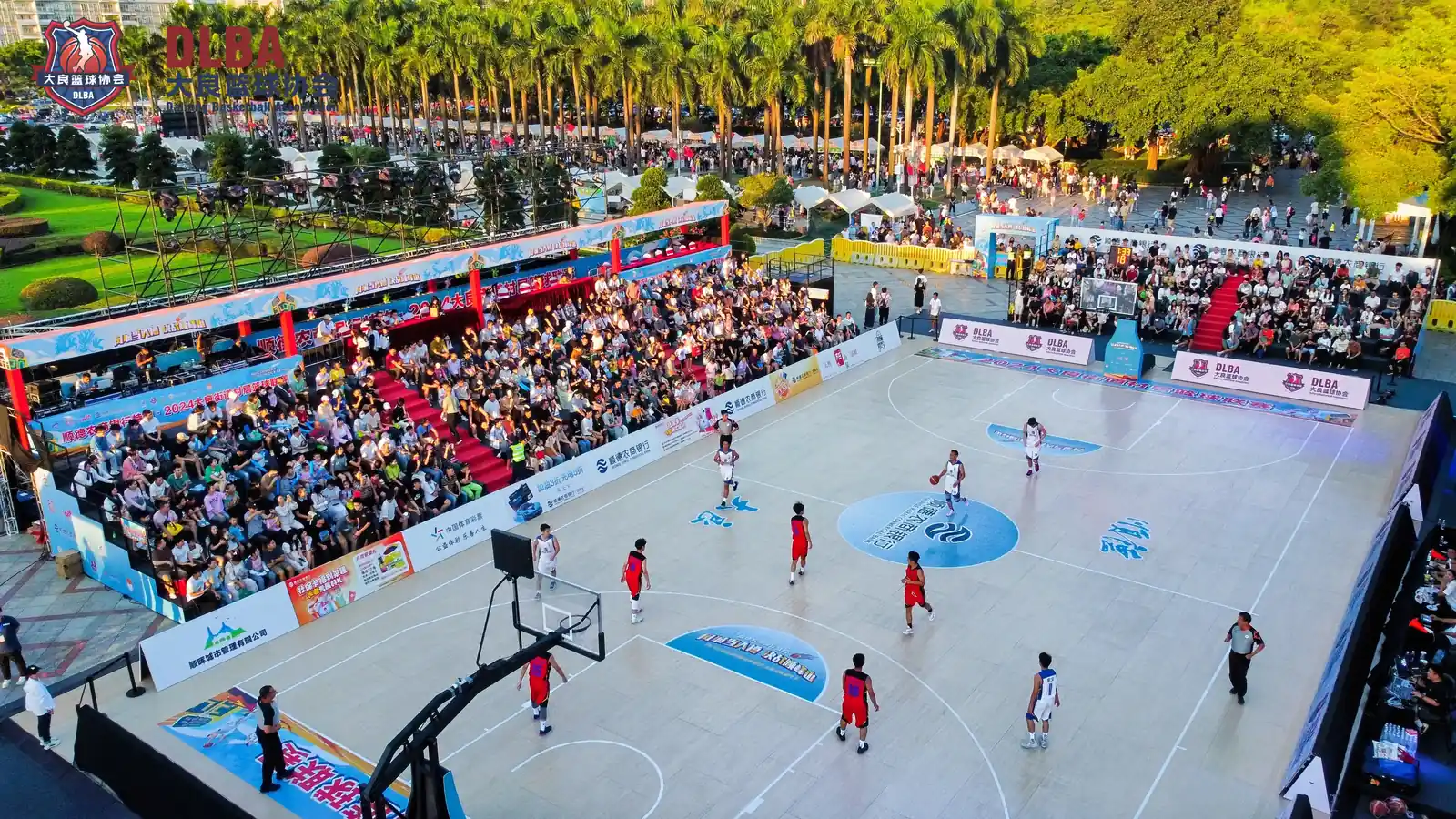
- Event or temporary courts: fast deployment, portability, full disassembly and reassembly without specialist tools.
Choose a surface that is rated to the maximum intensity of your use case, not one that is average. A surface subjected to recreational play on weekends will wear out early in case of everyday use in schools or other facilities.
Installation Type: Fixed or Portable
Fixed systems are attached or fixed to the subfloor. They provide increased stability, reduced panel-to-panel tolerances, and extended service life. Portable systems are set up on existing hard surfaces, torn down without destruction, and reconfigured to seasonal or event projects.
Check your project schedule and frequency of site use. An event-based temporary activation court at a sporting event requires a different system compared to a permanent community court at a community recreation facility.
Subfloor and Site Conditions
All outdoor high-performance surfaces require a stable and flat load-bearing base. Verify the following before specifying any flooring system:
- Good structural concrete slab or asphalt base.
- Surface plane within reasonable tolerance (local irregularities need to be grounded or patched over before fitting).
- Slope of drainage that carries water off the court (1% grade suggested minimum).
- Access to the site to deliver goods, stage, and install equipment.
Do not specify a flooring system on soil, grass, sand, or loose ground. These base conditions are not covered in the manufacturer’s warranty.
Step 2: Evaluate Wet-Weather Performance and Maintenance Demands
Rain does not wait for game day to end, and neither do your liability obligations. Court surfaces that are used outdoors should be safe in wet weather and should recover to playability as soon as possible. Consider each candidate surface on three wet-weather criteria before you complete your specification.
Drainage Performance Benchmarks
Drainage speed determines how fast a wet court becomes a safe court. Test or confirm these benchmarks before specifying:
- Perforated or open-grid modular tiles: water drains directly into the tile body, then through to the floor below; courts are in play in just 2 hours after heavy rain when the base slope is correct.
- Acrylic-coated surfaces: water runs to the edge through the slope; dry-up time is completely dependent on the gradient of the subfloor and air temperature; bases with low grade hold water and cause slip risks for hours.
- Bare concrete or asphalt: no surface drainage feature; drainage base only: standing water remains till it evaporates or drains away.
Request drainage time data from any manufacturer before accepting a quote. Generic claims of “excellent drainage” are not specifications.
Wet-Surface Traction Standards
Surface traction under wet conditions separates safe court surfaces from liability risks. Professional systems target a pendulum friction value above 70 when dry and above 90 when wet. Evaluate each surface type:
- Modular TPE tiles embed surface texture at the manufacturing stage; traction does not degrade as the tile wears.
- Acrylic systems broadcast silica aggregate into the resin during installation; grit size determines grip; fine aggregate becomes dangerously slick in rain.
- Bare concrete and asphalt deliver inconsistent wet traction and no engineered grip feature.
Check any sample of surface where the data of slip-resistance under wet conditions is required. Those courts that lack existing wet traction standards impose direct exposure to premises liability cases.
Maintenance Protocols by Material Type
Make comparisons of the yearly maintenance requirements prior to making a final surface decision. Lower purchasing prices usually translate into increased total maintenance expenses:
| Surface Type | Routine Maintenance | Periodic Maintenance | Approximate Resurfacing Interval |
|---|---|---|---|
| Modular BPC or TPE tiles | Sweep debris; rinse with water | Replace individual damaged tiles | None — tile replacement is spot-specific |
| Acrylic over concrete/asphalt | Sweep; wash with pH-neutral cleaner | Touch up painted lines | 5–8 years for full resurfacing |
| Bare concrete or asphalt | Sweep; patch cracks as they appear | Seal coat every 2–4 years | 10–15 years for major resurfacing |
Select a surface whose maintenance schedule is in line with the staffing capability of your facility. A low-maintenance surface that is more expensive at installation will tend to be less expensive over ten years than a low-cost surface that requires professional work every few years.
Step 3: Compare the Best Outdoor Basketball Court Flooring Options on Evidence-Based Metrics
Determine the best floor for outdoor basketball court projects by comparing each alternative with the same performance criteria. Best-case scenarios are characterized by the language used in material marketing. Evidence-based metrics, such as drainage speed, wet traction, shock absorption, thermal stability, and lifespan, indicate which surfaces work in service environments.
Modular Tile Systems (BPC and TPE)
Modular tiles are the most rapidly growing type of outdoor basketball court flooring as they address issues unresolvable by the other surface types: portability, spot repairability, and engineered shock absorption.
BPC tiles (Bio-based Polymer Composite) are recycled bio-based materials mixed with structural polymer engineering. They provide a panel-form, wood-like look and ball action that is installed over current hard-court surfaces. BPC panels are applicable in fixed and portable systems.
TPE tiles (Thermoplastic Elastomer) provide a smoother, more shock-absorbing surface. TPE is flexible over a broader range of temperatures compared to PP (polypropylene) tiles; this is a key feature in climates with either cold winters or high summer temperatures. The designs of perforated tiles drain water through the tile body, eliminating the pooling risk that is experienced with solid surface systems.
Use BPC or TPE modular tiles when your project needs to be portable, have a quick-deploying court, or have a surface that can be maintained and repaired by individual staff members, without outside contractor assistance.
Acrylic-Coated Concrete and Asphalt
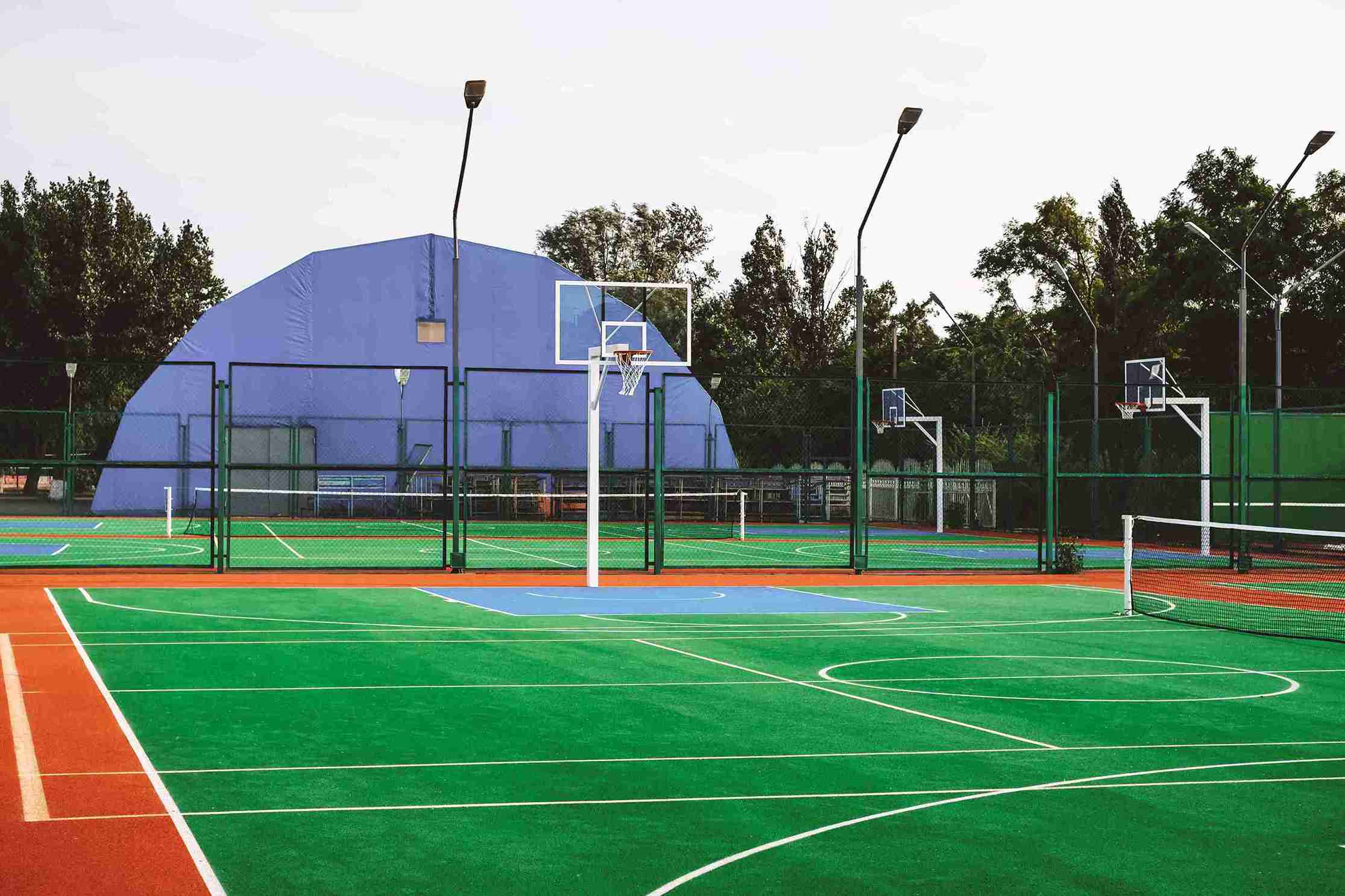
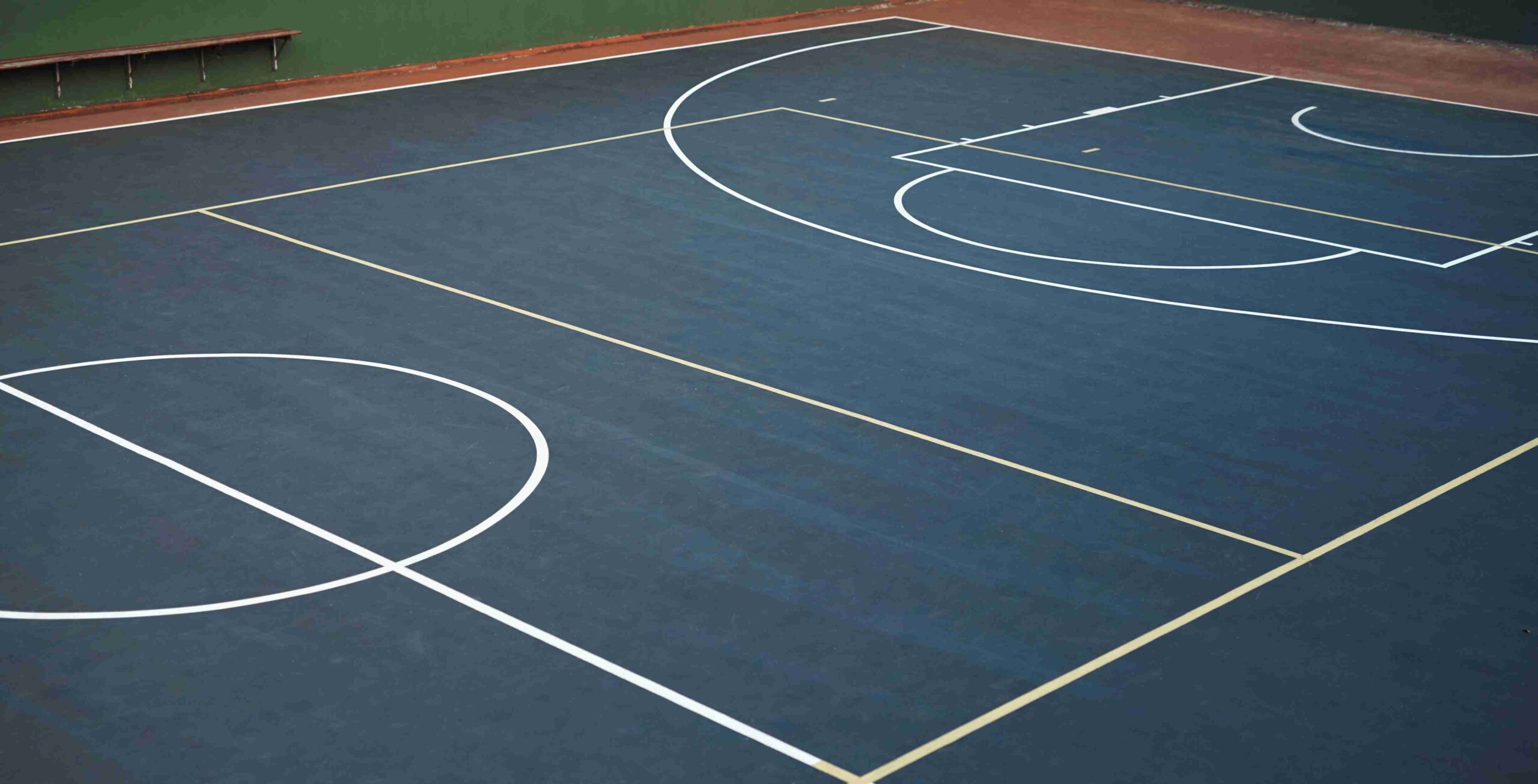
Acrylic coatings applied over a properly graded concrete or asphalt base create the “hard court” surface standard at professional outdoor competitions. The coating adds UV resistance, color, and surface texture over the base material.
Acrylic performs reliably when the base is in excellent condition, and the site drains effectively. Its limitations surface over time:
- Acrylic is a thin coating, not a structural layer; base cracks telegraph through it within 1–3 years on poorly maintained asphalt.
- Resurfacing cycles average every 5–8 years, requiring professional equipment and full-court downtime.
- Wet traction depends entirely on the aggregate mix used during installation; no surface self-corrects if the aggregate proves inadequate.
Use acrylic instead of concrete when an impervious surface, which is permanent and ready to compete, is required on site that has a sound base and competent drainage systems.
Bare Concrete and Asphalt
Outdoor basketball is the lowest day-one cost with bare concrete and asphalt. Both offer a low-maintenance, long-lasting base if the location is graded appropriately.
Their drawbacks are measurable:
- Zero shock absorption; joint and tendon stress accumulates over hours of play.
- Wet-surface traction relies entirely on surface texture, which smooths with wear.
- Asphalt softens in extreme heat, deforming under point loads from post anchors and equipment.
- Crack repair on asphalt requires regular attention to prevent hazardous surface breaks.
Only use bare concrete or asphalt on low-intensity projects with low budgets, where the risk of player injury and long-term surface appearance are less important.
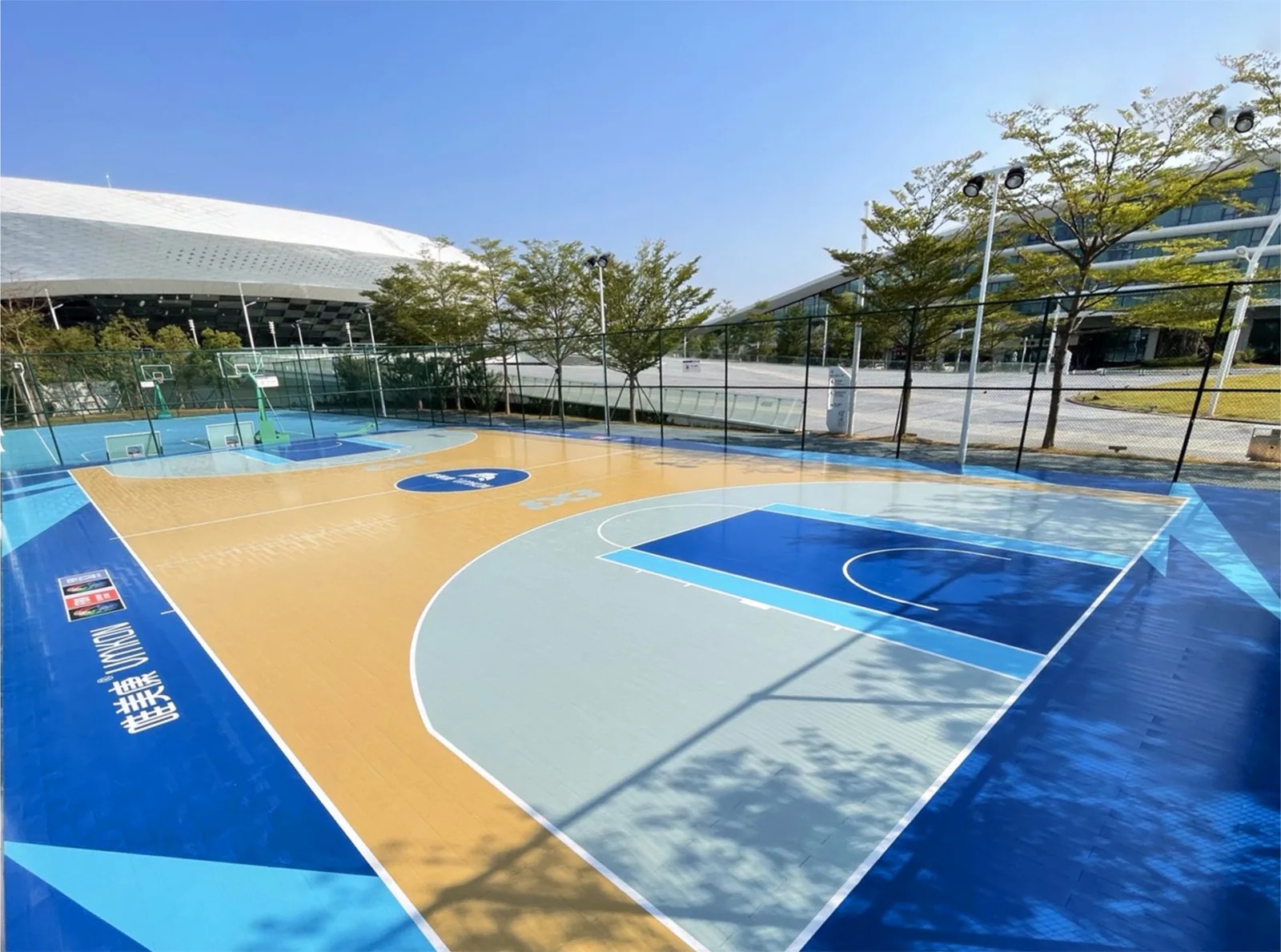
Why CopoSports Outdoor Basketball Court Flooring Stands Apart
CopoSports designs and supplies outdoor basketball court flooring systems from Temple City, California. Our product line revolves around bio-based content, the BPC (Bio-based Polymer Composite) panel form that is a combination of biomass recycled content and structural polymer engineering to produce a surface that works outdoors in climates and competition formats.
American-Designed. Bio-Based Materials.
CopoSports is dedicated to contractors, distributors, and project buyers requiring confirmed product specifications, OEM/ODM customization of colors, and direct project support. We offer systems that suit 3×3 basketball, 5v5 full-court competition, community sports fields, and temporary event fields. All systems are placed on concrete or asphalt; no proprietary subfloor needed.
Request a quote or contact us directly at +1 (314) 398-6785.
Product System Comparison
Compare all four CopoSports outdoor basketball flooring systems on the metrics that matter most for project specification:
| System | Model | Drainage | Wet Traction | Maintenance Level | Best For |
|---|---|---|---|---|---|
| Portable BPC Sports Flooring | BS-25P | Via perimeter and base slope | High, textured BPC surface | Low, panel swap, no resurfacing | Temporary event courts, fast deployment, 3×3 and 5v5 |
| Fixed BPC Sports Flooring | BD-18F | Via perimeter and base slope | High, textured BPC surface with built-in foam pad | Low, spot panel replacement | Permanent outdoor courts, 3×3 and 5v5 competition |
| PowerMatch 16mm Modular Tiles | VSK-252516 | High, perforated TPE tile body drains through | High, textured TPE surface retains grip when wet |
Very low, replace individual tiles |
Softer foot feel, noise reduction, broad climate use |
| PowerPro 19mm Modular Tiles | VSK-252519 | High, perforated TPE tile body drains through | High, Thicker TPE body enhances wet grip |
Very low, Replace individual tiles |
Maximum impact absorption, reduced injury risk, high-frequency use |
All systems support OEM/ODM color customization for brand or facility requirements. Confirm your court size, base type, and installation preference with the CopoSports team before ordering.
Frequently Asked Questions
What is the best flooring for an outdoor basketball court?
The optimal surface to use for an outdoor basketball court will be based on your project, budget, and the location. Modular BPC and TPE tile systems provide the highest levels of drainage, shock absorption, wet traction, as well as low maintenance over a lifetime for the contractor and the facilities managers. Acrylic over concrete applies to permanent competition courts that have sound subfloors.
Q: What is the best floor for an outdoor basketball court in a wet climate?
Select a perforated modular tile system in wet climates. The tile body has open drainage channels in the tiles (as in TPE modular tiles) that allow rainwater to drain through the tile body to the base, and the court is playable again within 2 hours. Acrylic and bare concrete are based on the use of perimeter slope and pool water only in poorly graded locations.
Q: How long does outdoor basketball court flooring last?
Modular BPC and TPE tile systems have a life of 15 years or longer with regular cleaning and replacement of spot tiles. The acrylic-coated surfaces generally need complete refurbishment after every 5 to 8 years. Bare concrete has a structural life of 30 years or more, and requires a 2- to 4-year cycle of crack patching and seal coating.
Q: Can outdoor basketball court flooring be installed over existing asphalt or concrete?
Yes, Modular BPC and TPE tile systems are mounted on structurally sound existing concrete or asphalt and do not need any adhesive or anchoring elements when used in portable settings. Fixed systems involve a keel system which is attached at the base. It is important to check base level, slope for drainage, and capacity of the system prior to specification.
Make the Right Call on Your Court Surface
Choose your outdoor basketball court flooring on the full scorecard: drainage, wet traction, shock absorption, maintenance load, and lifespan, not purchase price alone.
CopoSports supplies bio-based, American-designed outdoor basketball court flooring systems for contractors, distributors, and project buyers across 3×3, 5v5, public, and event-court applications.
Request a quote or call +1 (314) 398-6785 to discuss your project specifications with the CopoSports team.