
Pickleball is more than just a sport—it’s rapidly becoming a global sensation. Known for its accessibility and fast-paced gameplay, it’s a favorite among athletes, recreational players, and sports facility managers. But as pickleball grows in popularity, one question arises for those designing courts and facilities: What is the best flooring for pickleball?
From performance and safety to maintenance and cost, the choice of flooring can make or break the playing experience. This post will help you weigh the pros and cons of three popular flooring options—wood, synthetic, and rubber—to find the best fit for your needs.
Wood Flooring for Pickleball
Advantages of Wood Flooring
- Classic Aesthetic Appeal
Wood flooring is synonymous with elegance and tradition. Its timeless appearance enhances the look of any indoor sports facility, making it particularly suitable for multi-purpose venues.
- Familiar Feel
Many players prefer the natural bounce and smooth surface of wood. This familiar feel is ideal for pickleball as well as basketball, volleyball, and badminton courts.
- Multi-Purpose Functionality
Wood’s versatility allows it to be used for multiple sports—an important feature for facilities that host various activities.
Disadvantages of Wood Flooring
- High Maintenance Requirements
Wood floors require regular sanding, refinishing, and protection to maintain their appearance and performance. Spills, scratches, and wear from sports equipment can add to upkeep demands.
- Cost
Initial installation costs are high, and the ongoing expenses for maintenance can become significant over time.
- Unsuitability for Outdoor Use
Wood is highly sensitive to moisture, temperature changes, and UV exposure. It’s not a viable option for outdoor pickleball courts.
Synthetic Flooring for Pickleball
Advantages of Synthetic Flooring
- Versatile Application
Synthetic materials, such as modular tiles or cushioned vinyl, are suitable for both indoor and outdoor courts. Many synthetic options come with UV protection to withstand harsh weather conditions.
- Low Maintenance
Compared to wood, synthetic surfaces are much easier to clean and maintain. They resist stains, scratches, and damage from frequent use.
- Customizable Options
Synthetic surfaces offer extensive color and design options, allowing for creative branding and visually striking courts.
Disadvantages of Synthetic Flooring
- Slipperiness Risk
While most synthetic floors are engineered for traction, some options may feel slippery when wet or not properly textured.
- Professional Installation Required
The installation of synthetic flooring often requires skilled professionals, which can increase upfront costs.
Rubber Flooring for Pickleball
Advantages of Rubber Flooring
- Superior Shock Absorption
Rubber provides excellent cushioning, reducing joint strain and improving player comfort. This makes it especially appealing for older players or those recovering from injuries.
- High Slip Resistance
With a naturally grippy texture, rubber flooring is ideal for maintaining traction during rapid movements on the court, enhancing safety.
- Ease of Installation
Interlocking rubber tiles are simple to install, making them a cost-effective and quick solution for smaller-scale projects, such as home pickleball courts.
Disadvantages of Rubber Flooring
- Limited Aesthetic Appeal
While functional, rubber floors lack the polished look of wood or the customizability of synthetic options. Their design is often utilitarian.
- Potentially High Cost
Premium rubber materials can be expensive, particularly for larger courts or commercial facilities.
Comparison Table
Below is a detailed comparison of the three flooring types based on key factors:
| Factor | Wood | Synthetic | Rubber |
|---|---|---|---|
| Cost | $$$$ – High | $$ – Medium | $$-$$$ – Medium to High |
| Durability | 3/5 – Moderate lifespan | 4/5 – Long-lasting | 5/5 – Excellent durability |
| Maintenance | Regular sanding/sealing | Easy to clean | Minimal |
| Indoor/Outdoor | Indoor only | Indoor & Outdoor | Mostly Indoor |
| Shock Absorption | 2/5 – Minimal | 3/5 – Moderate | 5/5 – High |
| Slip Resistance | 3/5 – Decent | 3-4/5 – Depends on type | 5/5 – Excellent |
| Aesthetic Appeal | 5/5 – Premium look | 4/5 – Customizable | 2/5 – Basic design |
| Installation | High (Professional required) | Moderate (Varies by type) | Low (DIY-friendly) |
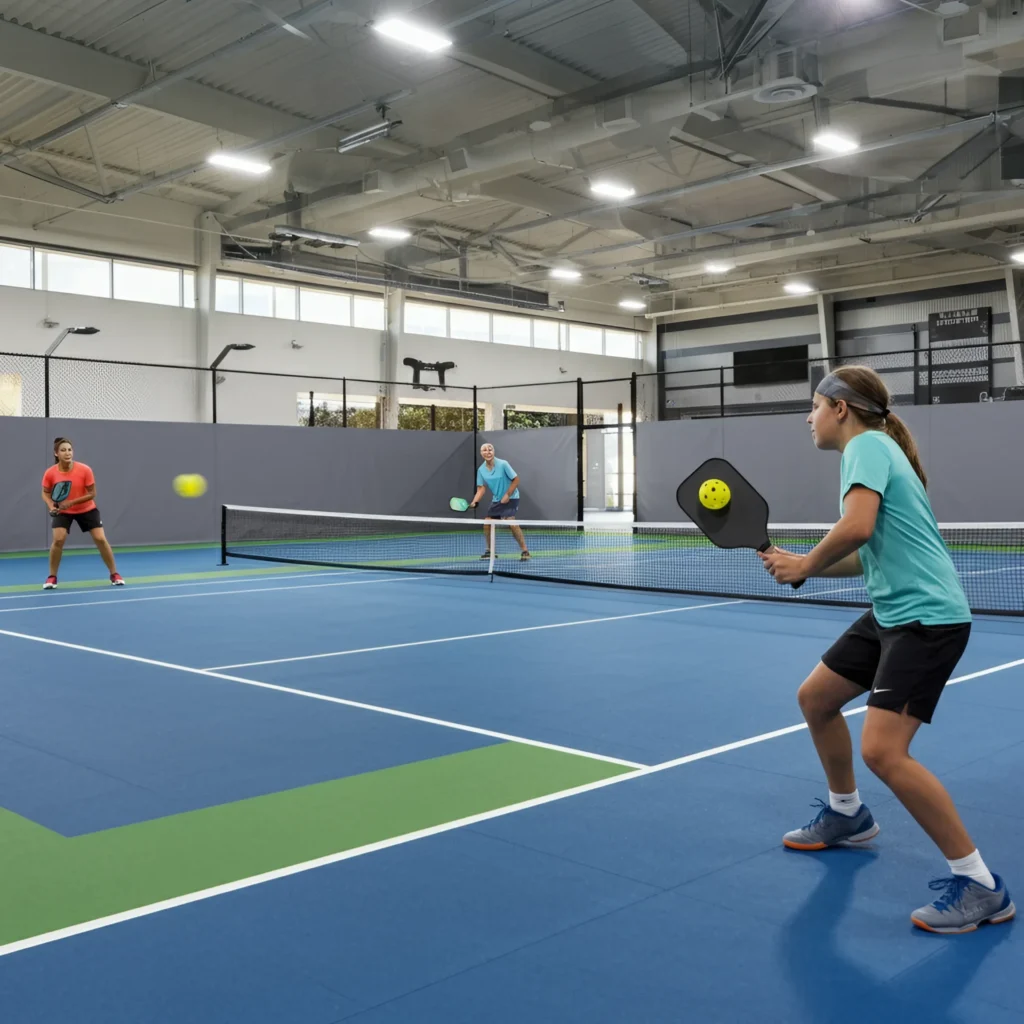
Factors to Consider When Choosing Pickleball Flooring
When deciding which type of flooring best suits your pickleball court, consider these key factors:
- Budget
Determine whether you prioritize upfront savings or long-term cost-effectiveness. Wood may have higher initial costs, while rubber and synthetic offer a range of options for different price points.
- Indoor vs. Outdoor Use
If you’re planning for an outdoor court, synthetic flooring with UV resistance is ideal. Wood flooring, on the other hand, is strictly an indoor option.
- Maintenance Needs
How much time and money can you commit to maintenance? Synthetic and rubber floors are far easier to maintain than wood.
- Player Safety
If shock absorption and slip resistance are critical for reducing injuries, rubber flooring offers the best performance.
- Aesthetics
Think about how important looks are for your court. Wood offers a classic, premium appearance, while synthetic provides customizable colors.
Expert Recommendations
Here are our flooring recommendations based on specific use cases:
- Home Courts
For homeowners or casual players, rubber flooring is a great choice for its ease of installation and excellent safety features.
- Professional Facilities
Synthetic flooring works best for professional pickleball centers due to its durability and suitability for both indoor and outdoor use.
- Multi-use Spaces
Wooden flooring is ideal for facilities hosting multiple sports or events thanks to its polished aesthetic and versatility.
Make Your Court Exceptional
Choosing the right flooring is a crucial step in creating the ultimate pickleball experience. From wood’s timeless elegance to rubber’s unmatched safety and synthetic’s versatility, each option has its own unique benefits.
Need help deciding? Contact us today for a free consultation and personalized flooring recommendations tailored to your needs. Have experience with pickleball flooring? Share your story or questions in the comments below!