
Proper basketball court flooring is more than just a surface to play on. It lays the foundation for performance, safety, and longevity while keeping your facility costs under control. Whether you’re developing a school gymnasium or upgrading a community sports facility, choosing the right flooring can make all the difference.
This guide will walk you through the critical factors, types of basketball court flooring, potential challenges, and actionable tips to help you make an informed decision.
Why Your Basketball Court Flooring Matters
The flooring of a basketball court impacts more than gameplay. Here’s why it’s critical:
- Safety: A good floor minimizes injuries by providing slip resistance and shock absorption.
- Performance: The right flooring enhances ball bounce, traction, and overall gameplay.
- Cost Efficiency: Durable materials reduce maintenance costs over time.
- Facility Aesthetics: Professional, polished floors contribute to the overall look and feel of the space.
Key Factors to Consider
Before choosing a flooring solution, look at these essential considerations:
1. Durability
Durable basketball floors withstand heavy foot traffic, intense gameplay, and environmental stressors. Materials like synthetic and rubber flooring last longer under demanding conditions.
2. Cost
Finding affordable gym floors doesn’t mean sacrificing quality. Consider total expenses, including installation, maintenance, and lifespan, to get the best value for your budget.
3. Safety Features
Compliance with safety standards such as slip resistance, shock absorption, and impact cushioning is crucial to protect players.
4. Maintenance Requirements
Evaluate maintenance challenges (e.g., cleaning, refinishing, repairs) to keep long-term costs manageable. Low-maintenance options reduce downtime and save money.
5. Climate Compatibility
If your facility is in a region with high humidity or extreme temperature variations, choose flooring that resists expansion, contraction, or moisture damage.
6. Local Suppliers and Regulations
Local suppliers often provide cost-effective solutions while being familiar with regional safety and building codes.
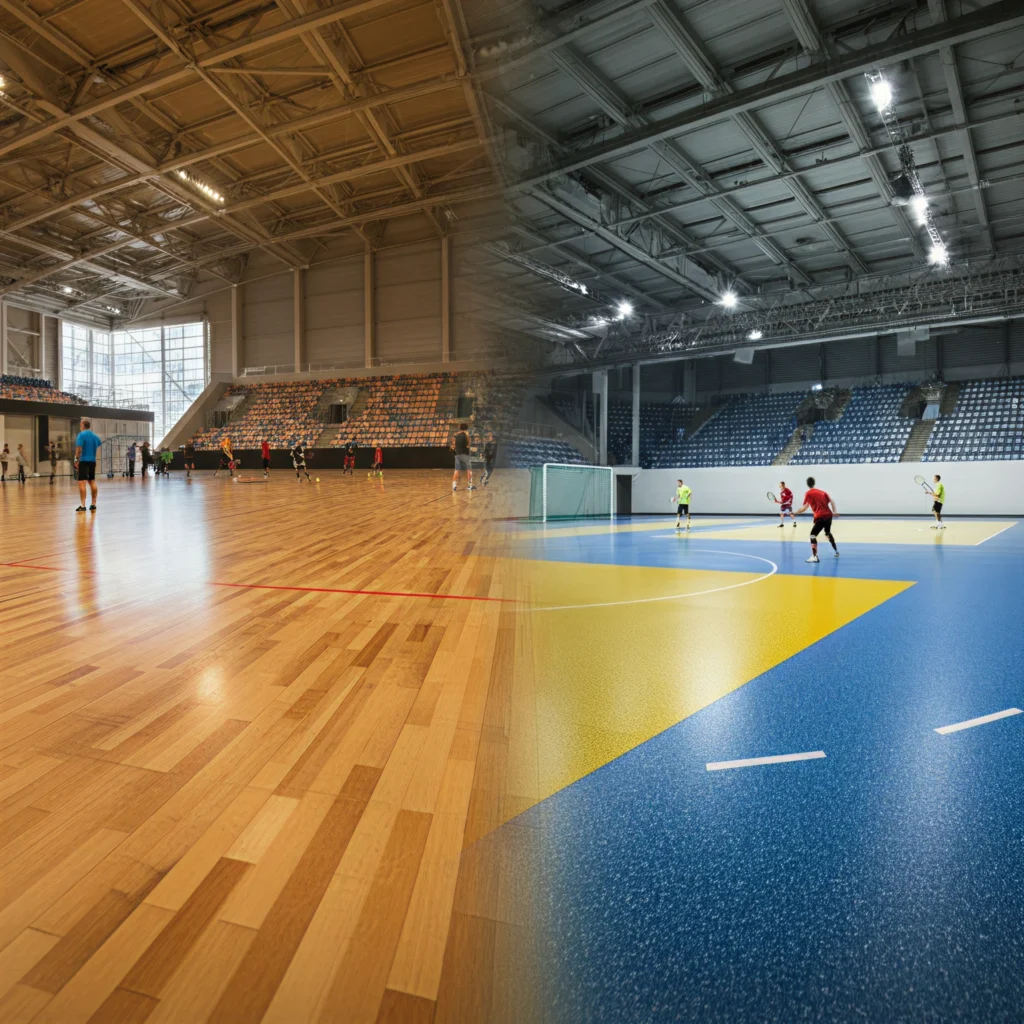
Types of Basketball Court Flooring
1. Wood Flooring
Overview
Traditional and iconic, wood flooring is the go-to choice for professional basketball courts.
Pros:
- Excellent ball bounce and traction
- Aesthetic, polished appearance
- Long-lasting with proper maintenance
Cons:
- Vulnerable to moisture and humidity
- Expensive installation and maintenance
- Requires controlled environmental conditions
2. Synthetic Flooring
Overview
Synthetic floors like polyurethane or vinyl are versatile and popular in gyms worldwide.
Pros:
- Affordable upfront cost
- Resistant to wear and tear
- Shock absorption for reduced injuries
Cons:
- Prone to discoloration from UV exposure
- Requires specialized cleaning agents
- Seams may separate if poorly installed
3. Rubber Flooring
Overview
Rubber flooring offers excellent durability and slip resistance, making it ideal for multi-purpose gyms.
Pros:
- Highly durable and impact-resistant
- Eco-friendly and recyclable options available
- Low-maintenance surface
Cons:
- Limited ball bounce makes it less ideal for professional play
- Odors from new rubber may require ventilation
- Higher upfront material cost in some cases
Comparing Pros and Cons
| Feature | Wood | Synthetic | Rubber |
|---|---|---|---|
| Durability | Moderate (moisture-prone) | High | Very High |
| Cost | High | Medium | Medium-High |
| Maintenance | High (frequent upkeep) | Moderate | Low |
| Safety | Excellent shock absorption | Above average | Excellent |
| Climate Resilience | Low | High | High |
Tips for Installation
1. Prepare the Subfloor
The subfloor directly affects the longevity and performance of your basketball court flooring. Ensure it is even, dry, and free from debris.
2. Hire Professionals
Professional installation ensures proper alignment, adhesive application, and optimal finishes. Experienced teams can tailor the process based on local climate conditions and facility requirements.
3. Follow Manufacturer Guidelines
Strictly adhere to the flooring manufacturer’s installation and maintenance recommendations to avoid voiding warranties.
Maintenance Guide for Longevity
1. Wood Flooring
- Moisture Control: Use dehumidifiers to maintain consistent indoor humidity.
- Refinishing: Sand and re-finish wood floors regularly to restore shine and performance.
- Cleaning: Use specialized hardwood cleaners to avoid damaging the surface.
2. Synthetic Flooring
- UV Protection: Minimize sunlight exposure to prevent discoloration.
- Seam Maintenance: Regularly inspect for loose seams or bubbling.
- Cleaning: Use non-abrasive cleaning agents designed for synthetic floors.
3. Rubber Flooring
- Regular Cleaning: Keep rubber surfaces dust-free with frequent mopping.
- Address Stains: Quickly clean spills to avoid permanent staining.
- Odor Management: Ventilate the facility if new flooring produces an odor.
Choosing the Right Basketball Court Flooring
Selecting the perfect flooring for your school or gym requires considering safety, cost, maintenance, and durability. By weighing your options, leveraging local resources, and adhering to safety standards, you can create a playing surface that ticks all the boxes.
Need Expert Guidance?
Interested in long-lasting, eco-friendly options for your basketball court? Get a Quote from Coposports today and learn how our bio-based sports flooring solutions can enhance your facility.