
At COPOSPORTS, we believe that understanding the infrastructure — especially the court — is essential for players, facilities, and sports enthusiasts alike. In this article, we explore the key differences between a standard pickleball court and a standard tennis court. We’ll cover court dimensions, net height, line markings, gameplay implications, and practical considerations for court conversions or multi-use setups. Whether you’re building a new facility or simply curious, this guide offers valuable insights to help you understand the differences between these two popular sports.
Court Dimensions & Layout
Pickleball Court
- A regulation pickleball court measures 20 ft wide × 44 ft long for both singles and doubles.
- The court size remains the same for both singles and doubles play, offering simplicity and consistency.
- A defining feature of pickleball is the non-volley zone, also called the “kitchen,” which is 7 ft from the net on both sides. Players must stay out of this area when hitting volleys, creating unique tactical play.
Tennis Court
- A standard tennis court measures 78 ft long and 27 ft wide for singles. For doubles play, the width expands to 36 ft.
- Tennis courts are significantly larger than pickleball courts, providing more room for running and endurance-based gameplay.
- Tennis courts have markings for singles and doubles play, with different dimensions for each.
Impact of Size Difference: Pickleball courts are much smaller than tennis courts, which allows for faster-paced gameplay and less physical strain. This makes pickleball a great option for players looking for a less demanding yet exciting game.
Net, Lines and Court Features
| Feature | Pickleball | Tennis |
|---|---|---|
| Net height | 36 in at posts, 34 in at center | 42 in at posts; 36 in at center |
| Court markings | Baseline, sidelines, center line, service areas, non‑volley zone (“kitchen”) 7 ft from the net | Baseline, sidelines, singles/doubles lines, service boxes; no “kitchen.” |
| Singles vs Doubles layout | Same court size for both singles and doubles | Different width for singles (27 ft) vs doubles (36 ft) |
Pickleball courts feature simpler markings, making them easier to navigate, especially for new players. The addition of the non-volley zone creates a distinctive style of play, focusing more on placement and control compared to the power and long rallies typical of tennis.
Impact on Gameplay, Strategy & Player Experience
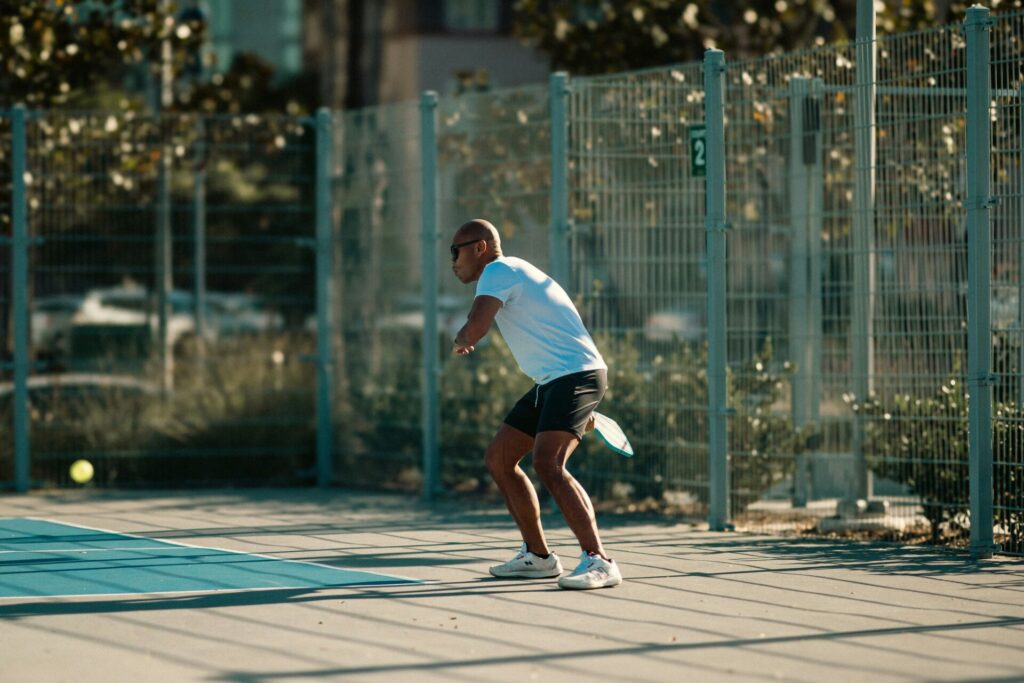
- Smaller court and lower net: With a smaller court and lower net, pickleball is faster-paced and requires less movement, making it more accessible to a wider range of players. The emphasis is on precision and strategy rather than raw power.
- The non-volley zone (kitchen): The unique non-volley zone forces players to be more tactical with their shot selection. Unlike tennis, where volleys are allowed anywhere on the court, pickleball restricts volleys in the kitchen area, promoting a more strategic and controlled style of play.
- Court dynamics: With quicker reactions and short rallies, pickleball gameplay requires agility and quick decision-making. Tennis, on the other hand, demands longer rallies and endurance, with players often covering the entire court.
- Accessibility: The smaller court, slower ball, and simpler rules make pickleball more accessible for beginners, older adults, or families, making it a sport that can be enjoyed by people of all ages and skill levels.
Converting Tennis Courts for Pickleball / Multi‑Use Considerations
Given the size disparity between the two types of courts, many communities or sports clubs opt to convert tennis courts into pickleball courts. Here’s how it works:
- A single tennis court can often fit multiple pickleball courts within its boundaries. Since a pickleball court is much smaller, two to four courts can be placed side by side in the same area used for one tennis court.
- Conversion requires re-marking the lines, adjusting the net height, and placing the net posts 20 ft apart instead of the 36 ft required for tennis. The net height should be 36 in at the posts and 34 in at the center for pickleball.
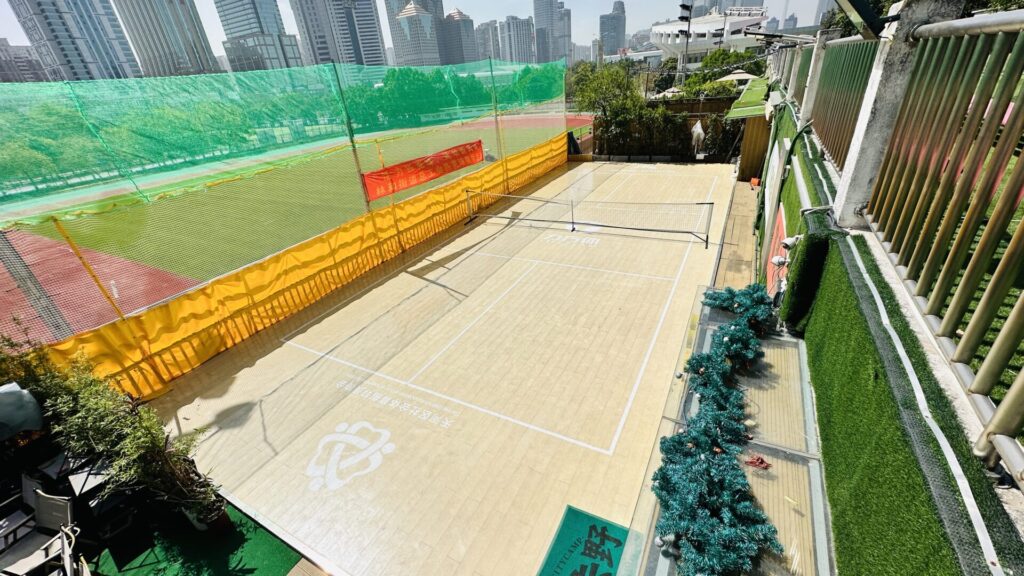
- Many facilities also opt for multi-use courts, where players can easily switch between tennis and pickleball. These setups allow for efficient use of space and accommodate different player needs.
This flexibility makes court conversions an effective solution for sports facilities looking to meet the growing demand for pickleball while maximizing available space.
Conclusion
While both pickleball and tennis share similar elements — such as rackets, a net, and rallies — there are clear differences in court size, net height, markings, and style of play. Pickleball’s smaller court, lower net, and unique non-volley zone make the game faster-paced and more focused on skillful shot placement and control. Tennis, with its larger court and longer rallies, emphasizes power and endurance.
For facilities looking to accommodate both sports, converting tennis courts into pickleball courts provides a practical and cost-effective solution. With just a few adjustments, you can offer both sports to players, catering to a wide range of interests and skill levels.
At COPOSPORTS, we hope this guide has helped you better understand the differences between pickleball and tennis courts. Whether you are planning to build a new facility, convert an existing court, or simply want to know more about these two sports, we’re here to assist you.
If you have any questions or need expert advice on court conversions or facility design, don’t hesitate to contact us. Our team is ready to help you create the perfect court for your needs!